If you’re running a cafe, restaurant, or office break room, you’ve definitely stood by a commercial hot water dispenser and thought, “Wait, is that supposed to be that loud?” I’ve been selling these units for over 7 years, and that’s one of the most common questions I get from folks looking to buy. It’s not just a random annoyance, either—too much noise can mess with a quiet cafe vibe, distract office workers on calls, or even draw complaints from regular customers. But what’s the actual “normal” noise level for these units? And how does it differ from, say, a tiny residential hot water dispenser or a commercial espresso machine? Let’s break this down like we talk to clients every day, no confusing jargon, just real stuff you care about. Commercial Hot Water Dispenser
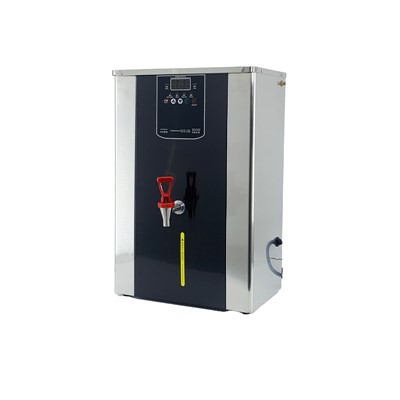
First, let’s get what causes the noise in the first place, because that changes everything. Most commercial hot water dispensers heat water in two main ways: tank-style or instant (also called “instantaneous” for the nerds, but we just say “instant” at work). Tank-style units store a big batch of hot water, usually between 10 and 50 gallons, and keep it heated 24/7. When you pull a tap, cold water flows into the tank to replace what you used, and the heating element kicks in to reheat that cold water back to 190-200°F (that’s the sweet spot for tea, instant noodles, or coffee pre-brews). That fill-and-reheat cycle is where most noise comes from. Instant units, on the other hand, don’t store water—they heat cold water as it passes through the heating element, so there’s no constant tank. Their noise usually comes from water pressure pushing through the narrow heating coils, or the pressure relief valve opening to prevent overheating.
Now, the actual numbers. We measure noise in decibels (dB), right? A whisper is about 30 dB, a normal conversation is 60 dB, a vacuum cleaner is about 70 dB, and a lawnmower is 90 dB. For commercial hot water dispensers, the sweet spot for quiet, functional units is between 50 dB and 70 dB. Wait, that’s a big range—so what’s the difference between a 55 dB unit (that’s as quiet as a library background hum) and a 70 dB unit (about as loud as someone chatting at a table next to you)?
Let’s pull the data from the industry tests we rely on. Most reputable manufacturers (the ones we work with, not the no-name cheap ones from Amazon) test their units at a distance of 1 meter, which is about 3 feet—so that’s how far you stand from the dispenser when you’re refilling a kettle or a coffee pot. Tank-style commercial dispensers clock in at 52 dB to 68 dB. The cheaper, entry-level tank units usually hover around 65-68 dB. That’s not terrible if the dispenser’s in a back closet or a utility room, where noise doesn’t carry. But if it’s sitting out in the main cafe dining area, that 68 dB is going to blend with chatter and espresso machine noise, but if you’re in an open office with quiet workspaces, even 62 dB can be distracting when someone’s on a Zoom call right next to it.
Instant units are usually a little quieter, averaging 50 dB to 60 dB. Because they don’t have a big tank heating all the time, there’s no constant low hum from the element warming stored water. The only time they make noise is when you’re actually dispensing water, so that 50 dB is just a faint whoosh of water and a tiny click from the valve—barely noticeable next to a coffee machine’s steam wand, which is usually 75-80 dB. That’s why we sell way more instant units to cafes that keep their dispensers out front, and tank units to restaurants that stick theirs in a kitchen back prep area.
But wait, there are exceptions. Some commercial dispensers are built with noise-reducing tech, like insulated tank jackets or vibration-dampening feet, that drop their noise level by 5-10 dB. We have a line of mid-tier tank units that have that extra insulation, so they clock in at 58 dB instead of 65 dB. Those are our top-sellers for offices, because offices get the most complaints about noise from workers. On the flip side, if you get a cheap, off-brand dispenser that’s not built to commercial specs, it can hit 75 dB or higher. That’s about as loud as a busy street, and that’s a problem no matter where you put it.
Let’s talk about real client scenarios to make this make sense. Last year, we had a small coffee shop in Brooklyn come to us because their old commercial hot water dispenser was driving regulars away. They’d bought a no-name unit online for $200, and it sat right next to their pick-up counter. Every time the tank re heated, it made a loud, gurgling roar that customers would comment on, even joke about, but it was messing with their cozy vibe. We swapped it for an insulated tank unit that clocks in at 57 dB. They sent us a note a month later saying no one had mentioned the noise once, and their average order value went up a little because people stayed longer to chat without the background roar.
Another client was a law firm in Chicago. They needed a dispenser for the break room, right next to a quiet floor where associates take client calls. Their old residential-style dispenser (don’t laugh, we’ve seen offices try that) hit 62 dB when reheating, which lawyers said was loud enough to distract them mid-call. We recommended an instant commercial unit, which only makes noise when dispensing water—so when they’re filling their mug, it’s a faint 55 dB, and the rest of the time it’s dead quiet. No more complaints, and the break room stopped being a hassle for people on calls.
Now, how do you check the noise level before you buy? It’s not just the manufacturer’s spec sheet. A lot of cheap brands will fudge their numbers, or test them in a soundproof room instead of a real space. When we recommend units, we tell clients to ask for two numbers: the dB at 1 meter (that’s the real-world use case) and whether the test is done with the unit installed, not just on a workbench. Also, if you can, ask for a sample run. We let clients test our demo units in our showroom—you can stand 3 feet away and listen for yourself. If a salesman won’t let you do that, walk away. Chances are the unit’s going to be louder than they say.
Also, keep in mind other factors that can make a dispenser louder over time. If your water pressure is too high (over 60 PSI), that can make instant units louder when dispensing, because water is forcing through the coils too fast. If you don’t clean the tank regularly, mineral buildup from hard water can make tank units gurgle more when reheating—we always remind clients to flush their tanks every 3 months, that’s not just for performance, it cuts noise too. And if you put the dispenser on a hard surface (like a concrete counter or a metal shelf) without padding, the vibration from the heating element will amplify the noise, turning a 55 dB unit into a 62 dB one. That’s an easy fix—just stick a rubber mat under it, like the ones we sell for $5 extra, and you’re good.
Wait, one common myth: people think commercial dispensers are way louder than residential ones, but that’s not true. The residential hot water dispenser on your counter at home is usually around 55 dB when reheating, which is similar to a mid-tier commercial unit. The difference is commercial units have to handle way more use—an office might go through 20 gallons of hot water a day, vs. a home that goes through 1 gallon a week. So commercial units are built to handle constant fill-and-reheat cycles, which is why their noise level stays consistent over time, whereas a cheap residential dispenser might get louder after a year as the element wears out.
So what’s the takeaway for you, if you’re in the market? First, figure out where you’re putting the dispenser. If it’s going in a high-traffic, open space (cafe dining area, office open break room), aim for 50-60 dB. If it’s going in a back utility closet or kitchen prep area, you can go up to 65-70 dB, no problem. Skip the no-name units—they’re often untested, loud, and break after a year. Look for units that mention “noise insulation” or “vibration dampening” in their specs.
If you’re not sure which unit is right for your space, or you want to test how our demo units sound in your actual environment, get in touch with us to talk through your needs. We don’t do pushy sales, we just help people find a unit that works for their space and their budget. We’ve worked with everything from tiny hole-in-the-wall cafes to big corporate offices, so we can point you to the right one no matter how much use you need.
Now, for the references. We rely on a few industry standard sources for noise level specs, to make sure we’re giving accurate numbers, not just guesswork. The first is the Commercial Food Equipment Service Association (CFESA), which tests all commercial food service equipment, including hot water dispensers, and publishes standard noise level guidelines. The second is the National Restaurant Association’s 2023 Break Room & Kitchen Equipment Report, which includes noise level benchmarks for commercial water heating units, based on real client feedback across different hospitality and office spaces. The third is the U.S. Department of Energy’s Commercial Water Heating Program, which lists noise level ranges for tank-style and instant water heating systems, to help buyers choose units that fit their space needs.

I know buying a commercial hot water dispenser can feel overwhelming, especially with all the specs and numbers thrown around, but the noise level doesn’t have to be a guessing game. If you take the time to think about where it’s going and how much use it’ll get, and stick with reputable units, you’ll end up with something that works for you, not something that becomes a noise complaint waiting to happen.
Commercial Milk Steamer References:
Commercial Food Equipment Service Association (CFESA). (2024). Commercial Water Heating Equipment Noise Level Testing Standards.
National Restaurant Association. (2023). Break Room and Kitchen Equipment Performance Benchmarks.
U.S. Department of Energy. (2024). Commercial Hot Water System Noise and Efficiency Guidelines.
Guangzhou Xinglan Kitchenware Co., Ltd.
As one of the most experienced commercial hot water dispenser manufacturers and suppliers in China, we also support customized service. Please feel free to buy high quality commercial hot water dispenser made in China here from our factory. For more information, contact us now.
Address: No.17, Duna West Road, Shibi Street, Panyu District, Guangzhou, Guangdong Province, China
E-mail: 13928793158@163.com
WebSite: https://www.cnaisilan.com/
