Hey there, if you’re in the market for a deionized (DI) water system—whether you’re a lab manager, a manufacturer making semiconductor parts, or someone just serious about ultrapure water for their processes—you’ve probably wondered: does the water I feed into my DI system actually matter? Spoiler alert: it’s way more than just “water in, water out.” As a DI system supplier who’s been troubleshooting installations and fine-tuning setups for over a decade, I’ve seen firsthand how a raw water source that’s overlooked can turn a reliable system into a headache of repairs, downtime, and expensive ion exchange resin replacements. Today, I’m breaking down exactly how your source water shapes your DI system’s performance, and why cutting corners here costs way more than a quick water test. Deionized Water System
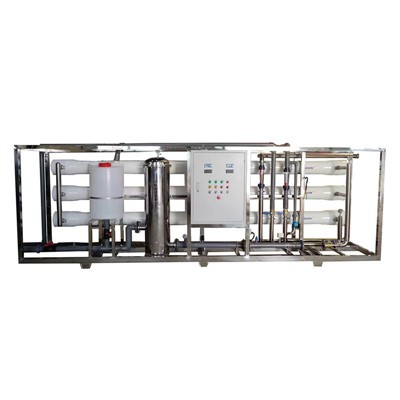
Let’s start with the basics, super simply: DI water systems work by swapping out the ions dissolved in regular tap or well water for hydrogen and hydroxide ions, leaving you with water that’s basically free of any charged particles—way purer than what comes from a reverse osmosis (RO) system alone. But here’s the thing: those charged particles aren’t one-size-fits-all. Your source water could be hard water (high calcium and magnesium), have high levels of sodium, chloride, or even heavy metals like iron or manganese, and each of these hits your system differently. I’ve had clients come to me after installing a cheap, off-the-shelf DI system, only to run it on untreated well water that had 150 ppm of hardness ions—and within three months, their resin bed was completely fouled. They thought the system was defective, but really, they didn’t test their source water first.
First up: total dissolved solids (TDS). This is the big first number you need to know about your source water. TDS is just a count of all the dissolved stuff in water, from salts to minerals, and it directly dictates how much work your DI system has to do, and how long your resin lasts. If your source water has a TDS of 500 ppm, that’s already way higher than the ideal feed for most standard DI systems (which is 100 ppm max). I remember a small electronics manufacturer we worked with last year—their tap water had a TDS of 420 ppm, so their DI system’s resin was dying in 6 weeks instead of the usual 6 months. Every time they had to replace the resin, that’s 2 hours of downtime plus $800 in parts, not to mention the lost revenue from their production line being offline. We fixed it by adding a small pre-treatment RO step before their DI system, which brought the TDS down to 80 ppm—suddenly their resin lasts 6 months, no more unexpected stops. TDS isn’t just a “general” metric, either. A system rated for 100,000 gallons of output will only do half that if your source TDS is double what it’s designed for. That’s a hidden cost most people don’t factor in when they’re buying a DI system—they look at upfront price, not long-term resin replacements based on their source.
Next, specific contaminants that love to mess with DI systems, even at low levels. Let’s talk about hardness first—calcium and magnesium. These are the “scale-forming” ions, right? If your water has hardiness over 5 grains per gallon, that stuff will build up on your resin beads, coating them so they can’t swap ions effectively. It’s like trying to have a conversation with a friend who’s got a blanket over their mouth—impossible. I once visited a biotech lab where their DI system was producing water that kept failing resistivity tests (DI water should be 18.2 MΩ-cm at 25°C, pure as it gets). Turned out their lab’s tap water had 8 grains of hardness, and the resin was so scaled up, it could only pull out half the ions it was supposed to. We installed a water softener pre-filter, which removed the hardness, and within a week their water quality was back up to spec. No more failed experiments, which was a huge win for them—their research is time-sensitive, so downtime here isn’t just annoying, it’s costly.
Then there’s iron and manganese—these are trickier, because even at 0.3 ppm, they can “poison” DI resin. I’ve seen this so many times: a food and beverage plant using well water with 0.5 ppm of iron, their DI system looked fine for a month, then suddenly the resistivity dropped off a cliff. Iron attaches to the resin beads and never comes off—it’s permanent. Once your resin is poisoned by heavy metals, you can’t regenerate it, you have to toss the whole bed. That’s a $1,200 fix, and again, downtime. For these contaminants, you don’t just need a softener—you need a oxidizing filter (like a carbon filter or media filter) to break down the iron before it hits the DI resin. A lot of clients skip that step because they don’t test for iron, and then they’re stuck replacing resin way earlier than expected. Even something like chloride—found in many municipal water supplies—can damage some types of DI resin over time, especially if it’s a strong anion resin. High chloride levels mean your resin has to work extra hard to swap those ions, which shortens its lifespan too.
Wait, what about municipal vs. well water specifically? That’s a common question. Municipal water is treated, so it has added stuff like chlorine, right? Chlorine is good for killing bacteria, but it’s terrible for DI resin—especially the cation resin, which can be degraded by long-term exposure to chlorine. A lot of municipal water systems have 1-2 ppm of residual chlorine, so you need a carbon pre-filter to remove that before it hits your DI system. If you don’t, your resin will break down from the inside out, and all those broken bits will end up in your DI water—something you definitely don’t want if you’re using it for semiconductors or pharmaceuticals. On the other hand, well water can have wild card contaminants: iron, manganese, high TDS, even nitrates from farming runoff. I’ve had a client with a small plating shop use well water that had 20 ppm of nitrates—their DI system was only designed for tap water, so the resin couldn’t pull out the nitrates, and their final water had too much contamination, ruining their plating jobs. They had to add an anion pre-filter for nitrates, which fixed it, but again—they didn’t test their well water before buying their system.
Another big impact: your source water affects the size of the DI system you actually need. I know it’s tempting to buy the smallest, cheapest DI system to save money, but if your source water is high in contaminants, that small system will be overwhelmed. Let’s do a quick example: a standard DI system for a small shop might process 50 gallons per hour (gph). If your source TDS is 100 ppm, that works great, resin lasts 6 months. But if your source is 300 ppm, that same 50 gph system is only processing 16 gallons per hour effectively—you’re going to be waiting around for water, and resin will die in 2 months. We always tell clients: the right system size depends first on your source water, then on how much water you use. Skipping that step leads to two things: not enough water when you need it, and constant resin replacements. I once had a client who tried to run a 20 gph DI system on their 80 gph production line, using high-TDS well water. They were falling behind on orders, so they bought a bigger DI system without adding pre-treatment, and within a month they were throwing out $2,000 worth of resin. It would’ve been cheaper to add a $300 RO pre-filter first, instead of rushing into a bigger system.
Here’s something most people don’t think about: regeneration cycles. DI resin isn’t a permanent sponge—you have to regenerate it with salt (for cation resin) and caustic (for anion resin) to recharge it. Your source water’s quality determines how often you have to regenerate. If your source is low in contaminants, you can go 2 weeks between regeneration; if it’s high, that might be every 3 days. For industrial users, that means more chemical costs, more time spent on manual regeneration, and more disposal of the used regeneration brine. That’s not just a hassle—it’s extra operational costs that add up fast. I had a pharmaceutical client that was regenerating their DI system every 4 days, using 50 gallons of brine each time. Adding pre-treatment cut that to every 12 days, so they saved 75% on their brine costs. That’s a tangible number, not just “it works better.”
Wait, let’s clear up a common myth: some people think “DI is DI, so just any water goes in.” No, that’s just not true. I’ve tested DI systems that were fed with untreated well water, and they produced water with resistivity that was only 5 MΩ-cm—way too low for any critical use, like making lab reagents or washing semiconductor wafers. The contaminants from the source water were overwhelming the resin, so it couldn’t get to the 18.2 MΩ-cm standard. On the flip side, a well-maintained DI system fed with pre-treated low-TDS water will consistently hit that perfect resistivity, no problem. The source is the foundation, right? You can’t build a strong house on bad soil, and you can’t get good DI water on bad source water.
So what should you do to make sure your source water and DI system work together? First, test your source water—don’t skip this. A basic test kit will give you TDS, hardness, chlorine, iron, and pH, which is all you need to start. If you’re a user in a regulated industry (like pharma or semiconductors), you’ll need a more detailed test, but even a basic test will catch the big issues. Then, talk to a supplier who can help you match pre-treatment steps to your source. That could be a carbon filter for chlorine, a water softener for hardness, an oxidizing filter for iron, or even a small RO system to cut TDS. Then, size your DI system based on your source’s TDS and your water usage, not just what someone else bought.
I’ve been in this game long enough to see clients waste thousands of dollars because they ignored the connection between their source water and their DI system. It’s not rocket science—just a little bit of testing and planning upfront saves so much stress and money later. If you’re in the market for a DI system, or you’re having issues with your current one (resin dying too fast, water quality not being consistent, downtime costing you jobs), I’m here to help. We can do a quick water test, walk you through what pre-treatment you need, and find a system that fits your specific source and usage—no one-size-fits-all garbage, just solutions that work for you.
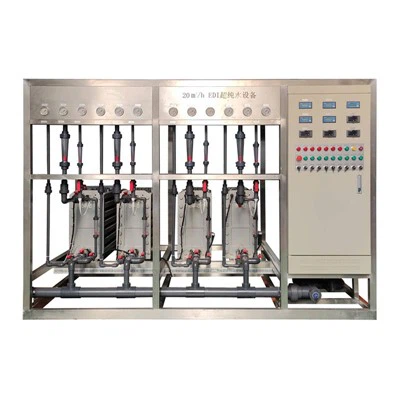
If you want to chat through your needs, just reach out to connect with our team. We’re happy to answer any questions, no pressure, just real advice from people who actually install and maintain these systems every day. Don’t let your source water be the hidden problem that derails your process—let’s make sure your DI system works for you, not against you.
RO Purified Water Equipment References
- American Water Works Association. (2021). Water Quality and Treatment: A Handbook on Drinking Water (6th ed.). McGraw-Hill.
- International Organization for Standardization. (2018). ISO 3696: Water for analytical laboratory use — Specification and test methods. ISO.
- Crittenden, J. C., et al. (2012). Water Treatment: Principles and Design (3rd ed.). John Wiley & Sons.
- Semiconductor Industry Association. (2020). Ultrapure Water Specifications for Semiconductor Manufacturing Equipment. SIA.
Shandong Yanuo Environmental Protection Equipment Co., Ltd.
We’re well-known as one of the leading deionized water system manufacturers and suppliers in China, featured by quality products and good price. Please rest assured to buy bulk deionized water system made in China here from our factory. Customized orders are welcome.
Address: North Side of the Road, 1,000 Meters West of the Intersection of Fenghuangshan West Road and Provincial Highway S102, Wangfu Subdistrict, Qingzhou City, Weifang City, Shandong Province.
E-mail: ynhb.499973983@gmail.com
WebSite: https://www.zkyaruo.com/
