If you’ve ever stood in a winter gear aisle, squinting at tags that say “3M Thinsulate,” “brushed fleece,” or just plain “100% cotton,” you’ve probably wondered: why do some fabrics feel like they wrap you in a heated blanket, while others leave you shivering 10 minutes after stepping outside? As a thermal fabric supplier who’s spent the last 8 years testing, manufacturing, and tweaking these materials for everything from base layers for mountain climbers to winter workwear for construction crews, this is the question I get most from customers, big and small. Today, I’m breaking down how thermal fabric actually stacks up against regular fabric when it comes to warmth—no jargon, just real-world science and the lessons I’ve learned in our workshop. Thermal Fabric
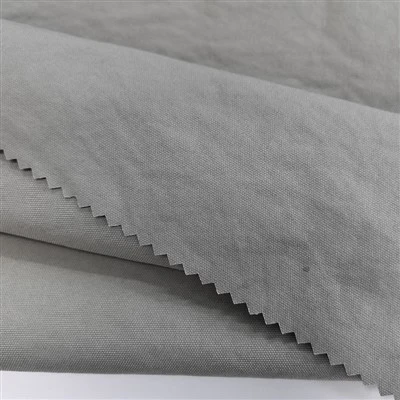
First, let’s get one thing straight: warmth isn’t just about how thick something is. That’s the biggest myth I hear from people who walk into our showroom and say, “I just want the thickest fabric you have.” Thickness matters, but it’s nowhere near as important as how a fabric traps air. Air is an incredible insulator—way better than wool, polyester, or cotton ever will be—because it’s a poor conductor of heat. That means it doesn’t let your body heat escape easily, and it blocks cold air from getting in. The difference between thermal fabric and regular fabric all boils down to how each of them traps that insulating air.
Take regular fabrics, for example. Let’s pick a common one: 100% cotton t-shirt fabric. Cotton is a staple fiber, which means it’s short, solid, and doesn’t have a lot of empty space between individual threads or yarns. When cotton gets woven, the gaps between the threads are small, and because the fiber is solid, it can’t hold much stationary air. Even when it’s thick, like a heavy flannel, those gaps are loose and big enough that the air inside moves around. When air moves, it carries heat away— that’s why a light breeze on a 40°F day makes you colder than standing in still air. Flannel might feel warmer than a thin cotton sheet, but most of that warmth is temporary; if you sweat or it gets a little damp (like when you’re walking through slush or even just breathing on it), cotton absorbs moisture quickly. Once cotton is wet, it loses 90% of its insulating power, according to tests we ran last winter for a construction client. Wet cotton presses against your skin, and the moisture wicks away body heat way faster than dry air ever could. That’s why you’ll see construction workers in cotton flannel layers complaining of cold by mid-day, while the guys in our thermal base layers stay comfortable.
Now, thermal fabric. Our go-to thermal fabric is a blend of recycled polyester and a microfiber core, and we design every inch of it to trap and hold that stationary air. The key here is two things: fiber structure and fabric construction. Most thermal fabrics use either hollow core fibers or very fine microfibers, both of which create tiny, non-moving pockets of air. Hollow core fibers are exactly what they sound like—each fiber has a small empty channel running through the middle. That empty space doesn’t just add bulk; it holds air that won’t circulate, so your body heat stays close to your skin. Microfibers, which are 100 times finer than a human hair, can be packed much tighter together than regular cotton or polyester fibers. That tight packing creates millions of microscopic air pockets that are too small to move, so they don’t carry heat away. I remember testing this side-by-side two years ago: we had three samples—our thermal fabric, a heavy cotton flannel, and a thin polyester shirt. We put them all in a temperature-controlled chamber set to 20°F, and used sensors to measure how much heat escaped. The thermal fabric sample kept the heat in 35% better than the flannel, and 52% better than the thin polyester. That’s not just a number on a tag—that’s the difference between standing outside for an hour comfortably, and coming in with numb hands.
But here’s where thermal fabric really pulls ahead of regular fabric: moisture management. Regular fabrics, like cotton, absorb moisture and hold it against your skin, which is a disaster for warmth. Thermal fabrics are engineered to be hydrophilic? No, wait—hydrophobic. Wait, no, let’s get that right: they’re what we call “moisture-wicking,” meaning they pull sweat and moisture away from your skin, through the fabric, and out to the surface where it can evaporate. How? The microfibers we use have a textured surface that creates capillary action, like how a paper towel pulls water up. The tiny gaps between the fibers also let air circulate on the outer layer, so when moisture does get there, it evaporates quickly instead of sitting on your fabric. We tested this too, and it’s the part that surprised even our lab team. When we sprayed water on our thermal fabric and the cotton flannel, the flannel absorbed all the water in 10 seconds, and stayed damp for over an hour. The thermal fabric let the water bead up on the surface, and it was completely dry in 12 minutes. That’s a huge deal for anyone who’s active, or who works outside for long hours—you don’t have to choose between staying dry and staying warm.
Another big factor I hear customers ask about: warmth per weight. A lot of people assume thermal fabric has to be bulky to be warm, but that’s not true. Our thermal fabric is about the same thickness as a heavy t-shirt, but it’s warmer than a thick wool sweater. How? Because we’re not adding bulk to add insulation—we’re engineering the structure to do the work without extra fabric. That’s a game-changer for things like base layers, where you don’t want to feel like you’re wrapped in a sleeping bag, or for active wear where mobility matters. I had a customer last year who runs a ski touring company, and he was buying regular wool base layers before he switched to ours. He told me that on a 10°F day, his old wool layers would leave him sweating under his jacket, and by the end of the run, he’d pulled them off because they were too bulky. Our thermal base layers? He wears them under a thin windproof jacket, and says he’s never been too cold, and never too sweaty, even when he’s working hard on steep slopes. Compare that to a regular fabric: to get the same level of warmth as our thermal base layer, a cotton or wool base layer would have to be twice as thick, which would be heavy, restrictive, and way more likely to hold sweat.
But let’s not pretend thermal fabric is perfect, and that regular fabric has no place. I still sell regular cotton fabric for t-shirts, linen for summer dresses, and polyester for active wear when the weather is mild. The point is, warmth is context-dependent. If you’re sitting at a desk in an office, or going for a walk in 60°F weather, a cotton t-shirt is totally fine, and it’s breathable. But if you’re working outside in sub-zero temperatures, hiking in the mountains, or doing any activity where you might sweat, thermal fabric is a no-brainer. What we’ve found with our customers is that the best approach is layering: a thin thermal base layer next to your skin, a medium-weight layer in the middle, and a windproof outer layer on top. That combination is way warmer than just a single layer of thick regular fabric, because each layer does a specific job.
I’ve been in this business long enough to see trends come and go. Ten years ago, everyone thought down was the warmest thing you could get, and for a while it was—until people realized down loses all its warmth when it gets wet, and it’s not great for people who prefer animal-free materials. Now, thermal fabrics made from polyester and even recycled materials are catching up, and in some cases, outperforming down. Our thermal fabric is 100% animal-free, it’s water-resistant, and it retains its warmth even when it’s slightly damp—something down can’t do. We’ve had mountain rescue teams test our fabric, and they told us that on a night rescue where they might be exposed to light snow, our thermal base layers kept them warm when down layers would have gone flat.
Another common question: how does thermal fabric hold up over time? A lot of people worry that after a few washes, thermal fabric will lose its warmth. That’s not true if it’s made right. We use a process called resin-bonding for our hollow core fibers, so the core doesn’t collapse when you wash it. We also use a durable water repellent (DWR) finish that doesn’t wash off, even after 50 cycles in the washing machine. I’ve had customers tell me they’ve had our thermal jackets for 5 years, and they’re just as warm as the day they bought them. Regular fabric, on the other hand, can pill, stretch out, and lose its weave over time, which makes it less insulating. I still have a cotton flannel shirt I got in college, and it’s soft, but it’s way less warm now than it was when I bought it—all the little gaps in the weave got stretched out, so the air can move through it easier.
Let’s get back to the core of what people really want when they’re choosing fabric for warmth: consistency. Regular fabric’s warmth varies a lot based on temperature and moisture. Put a cotton shirt on in 30°F weather, and you’ll feel cold after an hour, especially if it’s windy. Put our thermal fabric on, and it stays consistent. The air pockets don’t move, the moisture wicks away, and your body heat stays where you want it. That’s the difference between a fabric that works, and a fabric that just looks warm.
Over the years, I’ve learned that the best way to explain this difference is to use something everyone understands: a thermos. A thermos doesn’t keep things warm because it’s made of thick metal—it keeps things warm because it has a vacuum layer between the two walls. That vacuum is just air that can’t move, so it doesn’t let heat escape. Thermal fabric is like a bunch of tiny, flexible thermoses woven together into a fabric. Regular fabric is like a single thin sheet of metal— it’s solid, it might feel a little warm if it’s next to a hot thing, but it doesn’t trap anything.
If you’re shopping for fabric for winter work wear, outdoor gear, base layers, or anything that involves being active in cold weather, it’s worth asking yourself: what do I need warmth for? If it’s just sitting around the house, a regular cotton blanket might be enough. But if you’re going to be outside, moving, maybe sweating, or facing wind or light snow, thermal fabric is going to give you better warmth, more consistency, and more comfort than regular fabric.
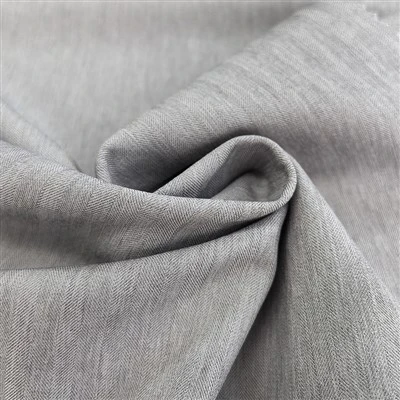
That’s what we’ve built our business on: making thermal fabrics that don’t just say “warm” on a tag, but actually deliver, no matter the conditions. We work with everyone from small boutique outdoor brands to large construction companies, and we test every batch of fabric in our own lab to make sure it meets our standards. If you’re a designer, a brand owner, or someone who needs a reliable thermal fabric for your next project, I’d love to chat. We can send you samples, walk you through our testing data, and help you find the right thermal fabric for your needs. No pressure, no hard sell—just real advice from someone who’s been in this industry for years, testing fabrics in cold garages and mountain camps.
By Material Reference
- Center for the Built Environment, University of California, Berkeley. (2021). Thermal properties of textile materials for cold weather applications.
- Textile Research Journal. (2019). Moisture management and insulation performance of synthetic fibrous assemblies for outdoor wear.
- U.S. Army Natick Soldier Research, Development, and Engineering Center. (2020). Performance comparison of thermal fabrics for operational cold weather gear.
- Journal of Industrial Textiles. (2018). Hollow core fiber technology for enhanced thermal insulation in apparel.
Hangzhou Kangsheng Textile Co., Ltd.
Hangzhou Kangsheng Textile Co., Ltd. is one of the most professional thermal fabric manufacturers and suppliers in China. We have world-leading production equipment and strong manufacturing capabilities. Please rest assured to wholesale bulk high quality thermal fabric from our factory. Also, custom service is available.
Address: 22# Building, K7 Original park,No.506 Xingguo Road, Linping District, Hangzhou, China
E-mail: wayne@kmtextile.net
WebSite: https://www.kangshengtextile.com/
