Hey there! If you’ve been tinkering with your basement’s lighting setup lately—whether it’s fixing that old pendant, swapping out a tired fixture, or just upgrading to save on energy bills—you’ve probably stumbled on this question: Can I use E10 bulbs in a basement light? As someone who’s spent way too many years in the E10 bulb game (yep, I’m the supplier you might’ve seen around), I get why this isn’t a straight yes or no. Basements are weird spaces—moist, dusty, sometimes wonky wiring, and totally different from your living room or bedroom. Let’s break this down like I would with a customer standing in my shop, no jargon, no fluff. E10 Bulb
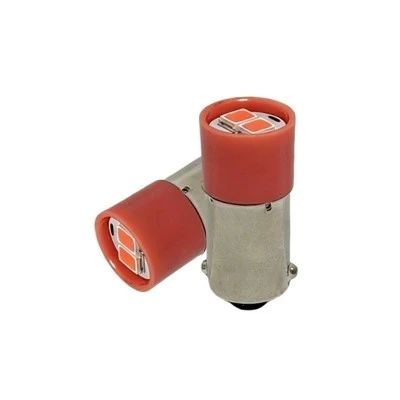
First, what even is an E10 bulb, anyway? Quick, no-technical-definition version: that E10 refers to the base size—10mm diameter screw-in base, like the tiny, slender cousin of a standard E26 or E27 bulb you use upstairs. You’ll find these mostly in older European fixtures, some small accent lights, certain task lamps, and, yeah, a lot of basement-specific fixtures too, especially if your house is a 70s or 80s build. The key here is that your basement light’s fixture is made for an E10 base, right? If the old socket screws into a 10mm thread, that’s non-negotiable—you can’t force a bigger base (like E12 candelabra) in there, it’ll short out. But even if the base fits, there are a bunch of basement-specific quirks you need to check before just screwing in your E10 bulb.
Let’s start with the big basement thing: moisture. Basements are damp—sometimes just a little “musty” humidity, sometimes actual water seepage after a heavy rain. Regular E10 bulbs (the ones most people buy for accent lights) are sealed for dry indoor spaces. If you splurge on a cheap E10 off Amazon that’s just a glass envelope and a metal base, that moisture can get inside, corrode the filament or the contacts, and boom—dead bulb in a week, or worse, a short that trips your breaker. That’s a risk I see way too often with basement installs. Now, not all E10 bulbs are equal here. If you’re buying from a supplier who carries moisture-resistant E10s—think plastic-coated bases or IP-rated sealing (IP44 minimum for damp spaces)—those are the ones to go for. I always tell customers: if your basement has ever had a water spot on the ceiling or a dehumidifier running 24/7, skip the standard dry E10s.
Next, dust and debris. Basements aren’t known for being spotless. If you’re using your basement as a workshop, a kids’ play area, or just storage, that dust can build up on bulb surfaces. Standard E10s have a clear glass shell that traps dust easily, cutting down on light output over time. Some E10 bulbs are made with frosted or diffused glass that resists dust buildup, and even easier: LED E10 bulbs (which most people use now, anyway) often have a sealed outer casing that keeps dust out. Wait, another point: heat. Old incandescent E10 bulbs get hot—really hot. If your basement has low ventilation, that heat can build up inside the fixture, warping the socket or even starting a fire if it’s right against stored boxes or insulation. If you’re using an incandescent E10, make sure your fixture has at least a few inches of space around the bulb. If you’re using LED E10s (which I swear by for basements—they run 90% cooler than incandescents), you don’t have to stress as much, but double-check the fixture’s maximum wattage rating. Even a cool-running LED E10 with a high wattage could overheat if the fixture is too small.
Then there’s wiring and voltage. Most residential E10 bulbs run on standard 120V household power, which is what your basement light uses. But wait—some tiny, specialty E10 bulbs (like the ones for model trains or old signage) run on 12V. You’d be shocked how many people mix those up and plug a 12V bulb into 120V basement wiring, blowing it instantly. That’s a silly mistake, but it happens. So before you buy, confirm your fixture’s voltage. If you’re upgrading from an old incandescent, check the socket’s label—most basement E10 fixtures are 120V, but it’s worth a quick look. Also, if your basement has older, ungrounded wiring (super common in pre-90s homes), make sure your E10 bulb has a metal base that’s properly grounded. Cheap ungrounded bulbs can shock you if you touch the socket, especially in damp spaces.
Wait, what if your basement light isn’t specifically labeled for E10 bulbs? Is that a problem? Let’s say you have a generic basement fixture you picked up at the hardware store, and the manual says it takes “small screw bases.” A lot of people assume that means E12, but no—sometimes “small” is regional. If your fixture’s socket actually fits an E10 (go measure: 10mm across the screw threads) and the wattage matches, it’ll work. But I’d test with a cheap E10 first before stockpiling a whole batch. If it flickers, feels loose, or gets too hot, that fixture might not be compatible, and you might need to swap the socket or the whole light. I’ve had customers come to me frustrated because they bought an E10 bulb that wouldn’t fit their basement fixture, turned out they measured the base wrong and it was E11. Oops, easy mistake to make—just use a caliper or a ruler, no guessing.
Now, let’s talk about what not to do. Don’t just grab any E10 bulb from the discount bin at the grocery store. Those are usually cheap, low-quality, made for display cabinets, not for use in basements. I see a lot of basement fires traced back to those cheap bulbs—they’re not built for consistent use, moisture, or temperature swings. If you’re sourcing E10 bulbs for your basement, look for ones with a “damp location” or “indoor humid spaces” rating. That’s the only seal of approval you need for this space.
As a supplier, I’ve learned a lot from customers over the years. Last year, a guy came in panicking because his E10 bulbs kept dying in his finished basement—turns out he had a leaky window that was dripping right on the light fixture. We swapped his standard E10s for IP44-rated E10 LEDs, and he hasn’t had a problem since. Another customer had a workshop basement and was using incandescent E10s that were blowing every month because of dust buildup—we recommended frosted LED E10s that block dust, and his lifespan went from 1 month to 2 years. That’s the kind of stuff I care about, not just moving product—making sure it works for your specific space.
Wait, another thing: if you’re using your basement as a living space (like a home office, gym, or guest room) now, you might want E10 bulbs that give good color temperature. Warm white (2700K-3000K) is cozy, cool white (4000K-5000K) is better for task work. A lot of E10 bulbs only come in 6000K super cool white, which is harsh—so if you’re using the basement for more than storage, look for E10s with adjustable color temp, or at least 3000K warm white. That’s a small detail but makes a huge difference.
Let’s wrap this up simple: Can you use E10 bulbs in a basement light? Yes, but only if you do a little homework first. Make sure the base fits (measure 10mm across), check the voltage, pick a bulb rated for damp or humid spaces, and if you’re using it for task work or living, get the right color temp. If you’re not sure, hit me up— I’ve helped hundreds of people pick the right E10s for their basements, no pressure, no sales pitch that’s too pushy.

If you’re gearing up to upgrade your basement’s lighting and need reliable E10 bulbs that are built to handle damp, dusty spaces, reach out to me to talk through your specific setup. Whether you need a small batch for a single fixture or bulk for a whole basement renovation, I’ve got you covered. I’m here to make sure your basement lighting works as hard as you do, without the hassle of dead bulbs or short circuits.
LED Headlight References
- National Electrical Code (NEC), Article 410, Lighting Fixtures
- Lighting Facts Program, U.S. Department of Energy, Indoor Lighting Guidelines for Humid Environments
- Illuminating Engineering Society (IES), Recommended Practice for Basement and Low-Level Space Lighting
BULBPLAN Co., Ltd.
As one of the most professional e10 bulb manufacturers and suppliers in China, our products have good reputation in the market. Please feel free to wholesale cheap e10 bulb for sale here and get pricelist from our factory. Quality products and reasonable price are available.
Address: No. 86 Zhongli Road, Nancheng Street, Dongguan City, Guangdong Province
E-mail: Alex@bulbplan.com
WebSite: https://www.nicebulbs.com/
