If you’ve ever stood on the shop floor next to a batch of metal parts that failed a quenching test—cracking too early, warping beyond tolerance, or never reaching the required hardness—you know how much rides on your quenching furnace choice. I’ve been in the quenching furnace supply business for 12 years, and I’ve sat across from hundreds of heat treat managers, shop owners, and maintenance leads who thought they were buying the “right” furnace, only to end up with a tool that held their production back, cost them thousands in downtime, and failed to meet quality specs. Choosing a quenching furnace isn’t just about picking a piece of equipment that fits your space or budget; it’s about aligning every part of the furnace with your specific parts, processes, and long-term production goals. Let’s break this down without the industry jargon that makes even veteran heat treat pros tune out. Quenching Furnace
First, start with the basics: what exactly are you quenching, and what do you need that process to do? I can’t tell you how many times a customer has walked into my showroom and said, “We need a quenching furnace,” only to leave out critical details that derail their entire purchase. For example, a shop that hardens small automotive valve stems has wildly different needs than a shop that quenches large, thick steel gears for heavy equipment. Let’s get specific here: if you’re working with steel, are you dealing with low-carbon, medium-carbon, or high-carbon alloys? Low-carbon steel is often carburized before quenching, while high-carbon might demand a slower cool to prevent cracking. For non-ferrous metals like aluminum or brass, quenching needs are totally different—you’re looking to set hardness and corrosion resistance, not transform the metal’s crystalline structure.
Next, the part dimensions and load size are non-negotiable. A furnace that works for a 100-pound batch of small pins won’t handle a 2,000-pound load of large gear blanks. I remember a customer a few years back who bought a batch furnace rated for 500 kg, thinking he could stretch it to hold 1,200 kg of thick steel shafts. The result? The bottom layer of shafts never reached the austenitization temperature he needed, so they were too soft, and the top layer burned from being too close to the heating elements. That mistake cost him two weeks of rework and a $15,000 repair to replace ruined parts. Always account for your maximum load dimensions, weight, and how you’ll load the furnace—whether it’s on trays, racks, or individual fixtures. If you have mixed load sizes, a furnace with adjustable hearth space or multiple load zones might be worth the extra cost.
Now, the type of quenching furnace. This is where most people get confused, and it’s where a lot of bad choices happen. There are four main types, each for a very specific use case, and picking the wrong one will kill your efficiency and quality. Let’s go through them simply:
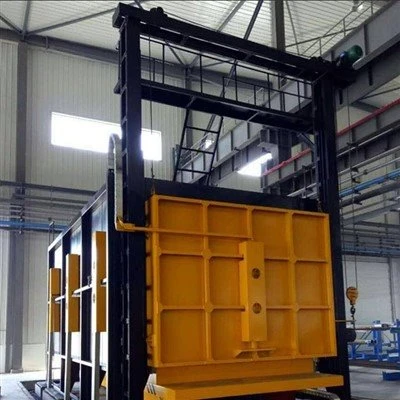
Batch furnaces are the workhorses for shops that do small to medium runs or need to process different parts in one load. They heat up a closed chamber, hold the temperature for a set time, then you quench the parts (either inside the furnace chamber or in a separate quenching tank). They’re flexible, easy to adjust for different part sizes, and great for low-to-medium volume production. The downside? They take time to heat up and cool down, so they’re not ideal for high-volume, continuous runs. I’d recommend a batch furnace if you’re running job shop work, where part specifications change weekly.
Continuous mesh belt furnaces are for high-volume, identical parts—like small fasteners, pins, or bearings. Parts move slowly through a heated mesh belt, going through austenitization, quenching, and tempering as they exit the furnace. They’re super efficient because they run 24/7 with minimal downtime for heating and cooling. But they’re rigid: if you suddenly switch to a larger part that won’t fit through the mesh belt, you can’t adjust it easily. If your production is steady and focused on one type of small part, this is a great pick.
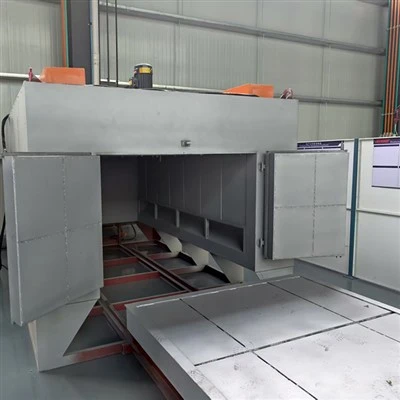
Pusher furnaces are similar to continuous furnaces, but instead of a mesh belt, you push batches of parts on trays through a long chamber. They’re used for medium-to-large parts, like axles or gears, that are too big for a mesh belt. They can handle heavier loads than mesh belt furnaces, and they’re still continuous, so less energy waste than batch furnaces. The tradeoff is that they’re less flexible than batch furnaces—changing tray sizes or part types requires significant adjustment time.
Vacuum furnaces are the fancy, precision option for parts that need ultra-high quality, like aerospace components or medical implants. They heat parts in a near-vacuum to prevent oxidation, so you don’t need to clean parts after quenching. They’re perfect for hard, precise parts where surface quality matters more than anything. But they’re way more expensive than other types, and they have lower load capacities. If your parts need zero surface contamination and high dimensional accuracy, a vacuum furnace is worth the investment, but don’t buy it just because it’s “high tech” if you don’t need that level of precision.
Once you’ve nailed down the type, next is temperature control and uniformity. This is the make-or-break detail that separates a good furnace from a bad one. I’ve seen furnaces that were rated for 1,200°C, but the temperature could vary by 50°C between the top and bottom of the chamber. That means half your load is perfectly hardened, and the other half is too soft or burned. How do you check for uniformity? Look for a furnace that has multiple thermocouples (not just one) placed in different areas of the chamber, and ask for a temperature certification—most reputable suppliers will provide a test that measures temperature across the load space. For most steel quenching, you need uniformity within ±10°C; for high-precision parts, you need ±5°C. Don’t skip this step—cheap furnaces often cut corners on thermocouple placement to save money, and you’ll pay for it in rejected parts.
Energy efficiency is another big one, especially with energy costs rising over the last decade. A furnace that uses 20% more electricity or gas every hour will cost you thousands extra in annual operating costs. What makes a furnace efficient? Insulation is key: modern furnaces use ceramic fiber insulation instead of old-fashioned brick, which holds heat better and takes less energy to reheat. Also, look for a furnace with a programmable logic controller (PLC) that lets you schedule heating cycles—so you can turn the furnace down during off-hours or weekends, instead of keeping it at full temperature 24/7. I always tell customers that the upfront cost of a slightly more efficient furnace will pay for itself in 1-2 years in energy savings. I’ve had customers buy a $50,000 cheap furnace, only to find their annual energy bill was $12,000 higher than a more efficient $65,000 furnace—so they ended up paying more in the long run.
Quench medium and system design. The quench step is just as important as the heat step, and the furnace’s quench system has to match your medium. Common quench mediums are water, oil, polymer, or salt, each with different cooling rates. Water cools fast, which is good for hardening high-carbon steel, but it can cause cracking if not controlled. Oil cools slower, which is better for medium-carbon steel and parts that tend to warp. Polymer is a newer option that lets you adjust the cooling rate by changing the concentration of the solution, so it’s flexible for different parts. If your furnace has an in-chamber quench system, it has to circulate the medium evenly around the load—if the flow is uneven, some parts will cool faster than others, leading to inconsistent hardness. Ask about quench flow rates, filter systems (to keep debris from clogging lines), and how easy it is to change the medium if you switch processes later.
Durability and maintenance. A quenching furnace is a big investment, and you want it to last 10-15 years, not 3. What makes a furnace durable? The heating elements: nichrome elements are common and affordable, but silicon carbide elements last longer and can handle higher temperatures. The hearth or tray system: if you’re moving heavy loads, make sure the hearth is made of thick, heat-resistant material, not thin steel that will warp over time. Also, ask about preventive maintenance requirements. Some furnaces need weekly inspections, while others have sealed components that only need annual checkups. I always suggest asking your supplier for a maintenance schedule and how easy it is to get replacement parts—if your supplier can’t get you a heating element in a week when yours breaks, your downtime will cost you more than the furnace’s parts cost.
Compliance and safety. Heat treat processes have strict safety rules—you’re dealing with high temperatures, flammable quench mediums, and fumes that can be toxic. Make sure the furnace you choose meets local safety standards (like NFPA for the U.S. or CE for Europe). Features like over-temperature protection, quench medium leak detection, and fume extraction systems aren’t optional—they’re required by law in most places. A few years back, a customer of mine tried to cut costs on a furnace without a proper fume extraction system, and they got a $20,000 OSHA fine when an inspector caught fumes building up in the shop. That’s a cost no one sees coming when buying a furnace, so don’t skip safety.
Now, let’s talk about common pitfalls I see customers fall into, to make sure you avoid them. First, buying based solely on upfront price. A $40,000 furnace might look like a steal, but if it has poor temperature uniformity, high energy costs, and frequent breakdowns, you’ll spend $60,000 in rework and repairs over three years. Total cost of ownership is way more important than initial price. Second, not planning for growth. If you’re a small shop now, but you’re planning to take on larger jobs in two years, don’t buy a furnace that’s too small. It’s cheaper to buy a furnace that fits your current needs with room to grow than to replace it a couple years later. Third, ignoring after-sales support. A furnace is only as good as the service you get when it breaks. If your supplier is 1,000 miles away and takes a week to send a technician, a simple breakdown can cost you $10,000 in downtime. Work with a supplier that has local service support or a fast response time— I make sure my team is on site within 48 hours for any emergency, no matter where the customer is located.
At the end of the day, choosing a quenching furnace is a balance between your current needs and your future goals, quality requirements, and budget. It’s not a decision to make on the spot, and it’s not one-size-fits-all. I’ve seen shops turn around their production, cut rework rates by 70%, and save tens of thousands in energy costs by picking the right furnace—and I’ve seen shops stall growth and lose money because they picked the wrong one.
Carburizing Furnace If you’re in the market for a quenching furnace and want to walk through your specific needs, get a custom recommendation, or discuss options that fit your production, reach out to our team to set up a consultation. We’ll come to your shop, look at your current parts and processes, walk you through the different furnace types, and help you pick one that works for you, not just the cheapest one on the market.
References
- ASM International. Heat Treater’s Guide: Practices and Procedures for Irons and Steels. ASM International, 2018.
- Campbell, F. C. Metal Joining: Principles, Processes, and Techniques. ASM International, 2009.
- Davis, J. R. Heat Treating: A Comprehensive Approach. ASM International, 2016.
- Nuclear Regulatory Commission. Industrial Heating Furnace Safety Standards. U.S. NRC, 2021.
Jiangsu Fangwei Furnace Industry Co., Ltd.
Jiangsu Fangwei Furnace Industry Co., Ltd. is one of the most professional quenching furnace manufacturers and suppliers in China. With abundant experience, we are committed to providing high quality customized products with competitive price. Please feel free to buy advanced quenching furnace made in China here from our factory.
Address: No.168, HuangNian Bridge, DaoShu Town, Danyang City, JiangSu Province, China
E-mail: fangwei@fwfurnaces.com
WebSite: https://www.fwfurnaces.com/
