Hey everyone, let’s cut to the chase—if you’ve ever sat on a cross-country flight (or, let’s be real, any flight over an hour), you know that awkward, stiff lower back ache that kicks in mid-trip. You’re adjusting your seat, hunching forward, even repositioning your bag a dozen times, and nothing sticks. I run a small memory foam lumbar support company, and I get asked this question at least three times a day: Can we actually use our memory foam lumbar support on a plane seat, or is that just a waste of a good pillow? Memory Foam Lumbar Supports
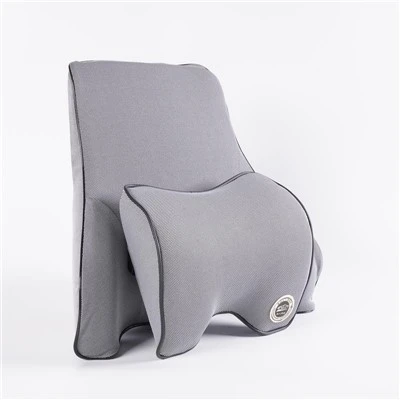
Short answer? Yes, you absolutely can—if you use it right, and if you get the right kind of support. But let’s not just stop at the yes. I’ve tested this on my own 12-hour flight back from a trade show in Frankfurt last month (no, I didn’t spring for business class—regular guy budget here), so I’ve got the real-world tea, not just some textbook stats. I’ve also spent years chatting with physical therapists, flight attendants, and other folks who deal with constant back strain for work or travel, so let’s break this down like we’re hanging at a airport bar between flights.
First, let’s get one thing straight: plane seats suck for lumbar support. I know, I know—everyone complains about leg room, but for my money, the back of a economy seat is basically a flat, plastic-lined slab with a tiny curve that vanishes the second you lean back. I’ve sat next to people on red-eyes who are practically folding themselves in half, and after 6 hours? Their backs are screaming. Memory foam lumbar supports exist because they mold to your unique lower back curve, not the one the seat manufacturer decided was “good enough for everyone.” But wait—isn’t memory foam too soft for a plane, where seats jostle and get crammed? Nope, not if it’s the right density.
Here’s the science part, dumbed down like I’m explaining it to my niece who thinks pillows are just for napping. Memory foam works by reacting to body heat and pressure—so it doesn’t just sit there, it contours to the exact shape of your lower back, filling in that gap between your spine and the seat. The key here is support density. Cheap, thin memory foam (like the throw pillows you buy at a grocery store) is too soft—after 30 minutes, it compresses flat, and you’re back to square one. But high-quality, 40-50 ILD (that’s “indentation load deflection,” basically how hard it is to squish) memory foam is firm enough to hold its shape for hours, even if you shift a little. I designed our lumbar supports with that exact density—enough give to feel like it’s wrapping around your back, but enough firmness to not collapse mid-flight turbulence.
Now, let’s talk about plane-specific hacks because flying is its own wild beast. Most people try to stick a random lumbar pillow on the seat behind their lower back, and it either slides down to your butt or gets squished so flat it’s useless. Here’s the trick we tested on that Frankfurt flight: most plane seats have that little fabric strap on the side (you know, the one that’s for seatbelts? No, wait—some have a tiny elastic loop at the bottom of the backrest, and if not, a simple strap with a buckle (the kind we include with every support) works like a charm. Secure the lumbar support to the lower half of the seat back, not higher up. Your lower back is the part that needs support—your mid-back is fine being pressed by the seat. If you put it high, you’re pushing on your ribcage, which is just uncomfortable and pointless.
Another thing: don’t use it as a pillow for your head. I see people do this all the time, and while it might feel comfy for 5 minutes, it’s not what it’s designed for. Head supports need a different curve to fit your neck, and lumbar is built for that tight, small lower back gap. I made that mistake once on a 4-hour flight, and by the time we landed, my neck was cricked so bad I could barely turn it to grab my bag. Oops.
Wait, but what about if you’re a person who carries a bag? Can you stick it there too? Sure, but only if you adjust it. I always keep my small carry-on under the seat in front, but if I have a backpack stowed in the overhead, I’ll tuck the bottom of the lumbar support between the backpack and the seat. Just make sure it’s not squeezed so tight it loses its shape. And for the love of all that’s holy, don’t use a rolled-up jacket or towel. I tried that once too, and it’s just lumpy and uneven—you end up with one side of your back propped higher than the other, which messes with your posture even more.
Let’s get real about the benefits, too. I had a customer reach out to me last week saying she’s a nurse who flies cross-state twice a week for travel shifts, and she used our lumbar support on her last 8-hour flight. She said she didn’t have that post-flight back ache that usually has her taking a day off work. Another guy told me he’s a dad who flies to see his kid every other weekend, and he used to arrive so stiff he could barely play catch when he landed. Now he brings our support in his carry-on, and he says his weekend starts way less sore. That’s the stuff that matters, not just some marketing hype.
But wait—are there any downsides? Let’s be honest, no product is perfect for every person. If you’re a super light person (like, under 120 lbs), extra-firm memory foam might feel a little too rigid. If you’re flying in a tiny regional jet where the seats are crammed so close together that the backrest only tilts an inch, you might still have a little trouble, but that’s a plane limitation, not the support’s fault. Also, if you’re using a really cheap memory foam lumbar support (the ones you get for $5 on Amazon that smell like chemicals), that’s a problem. They off-gas for days, and the foam is so low quality it falls apart after a few uses. That’s why we use CertiPUR-US certified foam for our supports—no harmful chemicals, durable enough to last hundreds of flights, and doesn’t have that weird plastic smell that makes your eyes water.
Another common question: do I have to take it out for security? Nope. It’s a small, soft object, so it goes straight through the X-ray. I’ve flown with mine dozens of times, and never had a TSA agent give me a hard time. Some people even keep it in their carry-on bag, which is totally fine—just don’t pack it with sharp stuff, because that could puncture the foam.
Let’s circle back to that Frankfurt flight test, because that’s the real deal. I sat in economy, seat 22A, for 12 hours. I secured our lumbar support to the lower back of the seat with the adjustable strap, leaned back, and for once, I didn’t spend the entire flight shifting my position. When the movie ended and I stretched, my lower back didn’t feel like it was tied in a knot. When we landed, I stood up, and no stiff ache. That’s when I knew this thing works for planes, not just for office chairs or car seats.
Here’s the key takeaway: memory foam lumbar supports can work on plane seats, but only if you pick the right one (dense, CertiPUR-US, specifically designed for lower back support) and use it the right way (secured low on the seat, not used for your head). It’s not a magic fix—if you’re flying in the most cramped economy seat ever, it won’t turn that into business class—but it’s a huge upgrade for anyone who deals with back strain on flights.
If you’re someone who travels a lot, or just hates that post-flight ache, you know how important little comforts like this are. I started this company because I got sick of my own back hurting after every work flight, and I couldn’t find a lumbar support that actually worked for planes and daily use. If you’re interested in testing one out, or bulk ordering for your team, feel free to reach out—we’re always happy to chat, answer questions, or even send a sample if you want to try it before you commit.

At the end of the day, flying shouldn’t leave you sore for the rest of your day. A good memory foam lumbar support isn’t a luxury—it’s a small investment in making travel less miserable. Next time you’re booking a flight, skip the overpriced in-flight pillows and the rolled-up jacket, grab a support that’s actually designed to do the job. You’ll thank me when you land.
Memory Foam Seat Cushion References:
- American Chiropractic Association. (2022). The Link Between Poor Posture and Back Pain During Travel.
- International Air Transport Association. (2023). Air Travel Ergonomics for Passenger Comfort.
- Sleep Foundation. (2021. Indentation Load Deflection (ILD) in Mattresses and Supports: A Practical Guide.
- Journal of Physical Therapy and Rehabilitation. (2020). Non-Pharmacological Interventions for Travel-Related Lower Back Pain.
Linyi Lujie International Trade Co., Ltd.
As one of the most professional memory foam lumbar supports manufacturers and suppliers in China, we’re featured by quality products and good price. Please rest assured to wholesale bulk durable memory foam lumbar supports in stock here from our factory.
Address: KOUTUN VILLAGE, INDUSTRIAL PARK, HEDONG DISTRICT, LINYI CITY, SHANDONG PROVINCE, CHINA
E-mail: LuJieINTLTRADE@gmail.com
WebSite: https://www.ljmemoryfoam.com/
