If you’ve ever ordered custom-printed PVC film rolls for a project—whether it’s for packaging, retail displays, or event banners—you already know how frustrating it is to open your shipment and notice the colors fading after a few days, or smudging when you run your fingers over the surface. As a custom PVC film rolls supplier, I get asked all the time: “How do I make sure the prints won’t fall apart before I even get to use them?” Today, I’m breaking down the science-backed, practical stuff we actually do to lock in color fastness, no jargon, no fancy hoops—just what works for us, and what you should be asking your supplier too. Custom PVC Film Rolls
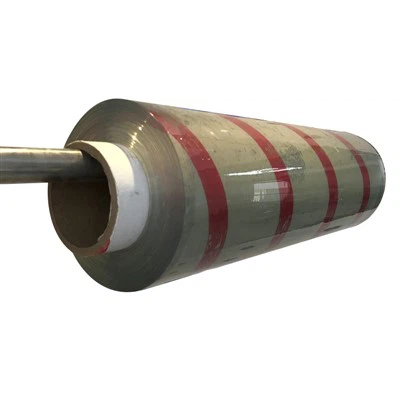
First, let’s get one thing straight: color fastness isn’t just about “choosing a good ink.” It’s a chain reaction that starts way before we even load the ink onto the PVC, and ends with how the film’s going to handle whatever you throw at it (sunlight, moisture, handling, cleaning). I see a lot of clients skip the prep steps because they’re in a rush to get their prints done, and that’s where most issues pop up.
Let’s start with the film itself. Not all PVC is made the same, and if you cut corners here, no amount of fancy ink will save your colors. Our team always uses 100% virgin PVC for custom prints—no recycled material, no fillers, no thin coatings that flake off. Recycled PVC often has leftover resins that mess with ink adhesion; even worse, some suppliers will add cheap stabilizers that break down when exposed to UV light. For example, a client once ordered a batch of printed PVC banners for a farmers’ market, and their old supplier used a recycled PVC roll. After two weeks of being outside, the reds and yellows faded so bad you couldn’t tell their logo anymore. We swapped out their film for virgin PVC, added UV protection during printing, and that same banner still looks bright a year later. It’s not that recycled PVC is bad for every use, but for color fastness, virgin is non-negotiable.
Next up: the base coat. This is one of the most underrated steps, and it’s a game-changer for how ink sticks to PVC. Raw PVC is naturally a little oily (it has plasticizers to make it flexible, which is great for printing, but the surface can repel ink). If we skip the primer, the ink just sits on top of the film, not bonded to it. So we use a specialty adhesion promoter base coat that’s designed specifically for PVC, not generic primers. Here’s the science bit, simplified: that primer creates a tiny molecular bond between the PVC and the ink, instead of just a physical layer. I’ve tested this with old clients who had smudging issues—we re-printed their rolls with the base coat, and they told us they could run the prints through a high-speed conveyor, wipe them with a damp cloth, and no smudges. Without that primer? Even the thickest ink will flake off after a few wipes.
Now, the ink part. A lot of people think “the more ink, the better,” but that’s not true. It’s all about the type of ink. For outdoor use (banners, packaging that gets shipped in the rain, displays), we use UV-curable inks, not solvent-based or eco-solvent. Wait, let’s clarify: eco-solvent is fine for indoor stuff, but UV-curable is way better for long-term color fastness. Why? UV inks cure instantly when exposed to UV light—meaning they don’t sink into the PVC and then dry; they cross-link, forming a hard, flexible layer that’s resistant to fading, moisture, and abrasion. We had a client who printed custom PVC for outdoor trade show signs; their old signs used eco-solvent ink, and after a month, the edges were fading and the black text was smudged. We switched to UV ink, and their signs stayed vibrant for three months straight, even through rain and hot sun. For indoor use—like product labels, shelf talkers, or point-of-sale displays—we use high-quality pigment-based inks instead of dye-based. Dye inks fade way faster over time, even indoors, because they’re actually tiny particles of color dissolved in a liquid. Pigment inks are solid particles that bond to the primer and PVC, so they stick around way longer.
Here’s another step we don’t cut: curing and post-treatment. When we print with UV inks, we run the film through a UV curing oven right after each pass—some suppliers skip this, let the ink air-dry, and that’s when smudges happen. The curing step locks the ink into the base coat so it can’t transfer. For extra protection, depending on what the film will be used for, we apply a clear topcoat—either a matte or glossy laminate, depending on your preference. The laminate acts like a shield: it blocks UV rays from breaking down the ink, repels moisture so it can’t seep under the print, and adds a layer of scratch resistance. A client who printed custom PVC for food packaging told us their old packages would smudge when they wiped off finger marks; adding a clear topcoat fixed that, and they’ve had zero complaints about print quality.
But color fastness isn’t just about what we do at our shop—it’s about how the film will be handled after you get it. We always ask clients about their end use: is this for indoor or outdoor? Will it be handled a lot, or stored in a warehouse in the dark? Will it be exposed to chemicals, like cleaning supplies or packaging materials? That changes everything. For example, if you’re printing PVC that will be used for outdoor garden signs, we’ll bump up the UV resistance of the topcoat. If it’s for a food label that will go through a microwave, we use a heat-resistant topcoat to make sure the ink doesn’t fade when heated. I had a client once who didn’t tell us their custom PVC was going to be used for microwaveable meal labels—they got the roll, printed their design, and when the label hit the microwave, the blue ink ran. We adjusted our ink and topcoat to be heat-resistant, and now all their labels work perfectly.
Another common mistake clients make: storing the printed PVC rolls wrong. If you leave them in direct sunlight for weeks before using them, the UV rays will already start breaking down the ink, no matter what we do. We always send a little note with every order: “Store rolls in a cool, dark place, not laid flat on a sunlit shelf.” That’s a tiny thing, but it makes a big difference. I once had a client who stored their rolls in a shipping container on a loading dock for a month, and when they unrolled them, the colors were faded. We gave them a discount, but we also told them about storage best practices, and their next batch was perfect.
Let’s also talk about testing. We never send a batch without doing a quick color fastness test. The standard tests are things like rubbing the print with a damp cloth (to check for smudging) and exposing a small piece to UV light for 72 hours (to check for fading). If the ink doesn’t pass either, we reprint it. A lot of small suppliers skip these tests to save time, but that’s how you end up with a bad batch. We make testing non-negotiable—our quality team checks every single order before it ships.
I know, this all sounds like a lot, but it’s what we’ve learned over years of printing custom PVC film rolls for all kinds of clients. The biggest takeaway? Color fastness is a partnership between you (telling us exactly what you need the film for) and us (using the right prep, ink, and topcoat to lock in those colors). It’s not a mystery, and it doesn’t have to cost a fortune—we don’t charge extra for the base coat or UV inks when they’re needed; that’s just part of doing it right.

If you’re planning a project and want to make sure your custom PVC film rolls stay bright, no matter what you use them for, reach out to our team. We’ll walk through your needs, explain exactly what we’ll do to keep your colors fast, and even send over a test sample if you want to see for yourself. No fine print, no hidden fees—just straightforward advice for your printing project.
PVC Printing Film References:
- Printing Ink Manual, 5th Edition, edited by Robert Leach and Richard Pierce.
- PVC Properties and Processing for Packaging Applications, Wiley-Science, 2018.
- Color Fastness Testing Methods for Digital Printing, Textile Institute, 2020.
- UV-Curable Inks for Flexible Packaging, Journal of Printing Science and Technology, Vol. 68, No. 3, 2019.
Nantong Dahe Composite New Material Technology Co., Ltd.
Address: South Side of Pinghai Highway, Pinghe Village, Dongshe Town, Tongzhou District, Nantong City, Jiangsu Province, China
E-mail: nantongdahe@outlook.com
WebSite: https://www.cndahetech.com/
