As a supplier that specializes exclusively in fitting parts for Dodge vehicles, I’ve spent the last decade diving deep into the unique engineering and performance specs of every model the brand rolls out. But nothing tested that expertise quite like when a shop owner from Palm Springs reached out six months ago, begging for help: his customer had dropped a six-figure sum on a Dodge Challenger SRT Demon 170, and the factory navigation system kept cutting out mid-drag runs. The infotainment lag, he said, was so bad it threw off launch timings—and for a Demon 170, launch timings are everything. That call kicked off months of testing, problem-solving, and what I think is one of the most important projects I’ve led in my career: figuring out if the factory navigation system is actually fit for the Demon 170, and if not, how we can make it right. Fit for DODGE
First, let’s talk about what makes the Demon 170 not just another Challenger. This isn’t a car for grocery runs or daily commutes. It’s a purpose-built drag racer, with a 1,025-horsepower supercharged HEMI V8, a drag-optimized suspension, and a tuned powertrain that can push it from 0 to 60 mph in just 1.66 seconds. It’s designed for quarter-mile runs, stripped of unnecessary weight wherever possible—including some of the infotainment and navigation components that work fine on street-legal Challengers, but crumble under the Demon’s extreme load. That’s the first big mistake people make: assuming the factory navigation system is a one-size-fits-all fit for every Dodge model. For the SRT Demon 170? It’s not just a mismatch—it’s actively working against the car’s intended performance.
Let’s break down why. A standard Challenger navigation system is calibrated for street driving, with soft throttle maps, steady speeds, and infotainment components that prioritize media streaming and route plotting without heavy processing. The Demon, though, produces massive electrical draw. When you launch it, the alternator ramps up to nearly double its standard output to feed the powertrain control module, the traction control system, and the drag-specific data logging tools. The factory navigation’s processor, which is located in the dash and shares power with the infotainment system, can’t handle that fluctuating load. I tested this in our test lab by hooking the navigation system up to a dynamometer that mimicked the Demon’s drag launch power spikes. In every trial, the processor dropped frame rate by 70% in the first three seconds of a launch, then froze entirely for 10 to 15 seconds. That’s not just an inconvenience. A lot of drag racers use the Demon’s navigation to plot and save exact quarter-mile routes, mark launch points, and even sync with timing systems. If the navigation is frozen mid-run, you lose all that data—and if you’re trying to beat a personal best, that’s a devastating setback.
Another issue: location accuracy. For street navigation, the factory system uses a standard GPS receiver that’s accurate to about 3 meters. For a drag racer, that’s not enough. When you’re lined up at a drag strip, a 3-meter error means the navigation might plot the start line as three feet ahead or behind where it actually is. That’s enough to throw off a launch timing light sync, or make a racer think they’re at the start line when they’re not, leading to a false start. We verified this by testing the factory GPS against a high-precision RTK (Real-Time Kinematic) receiver, the same tech used in professional drag racing. The RTK receiver was accurate to less than 10 centimeters, while the factory navigation’s GPS couldn’t even lock onto the launch lane 20% of the time. That’s a non-starter for a car built exclusively for drag performance.
But here’s the good news: when we started modifying the navigation system for the Demon 170, we found solutions that fix every single one of these issues, without sacrificing the factory’s original safety features or warranty. First, we upgraded the navigation’s power supply to a dedicated, regulated circuit that only pulls power from the battery when the engine is at idle or cruising, and uses a small, high-capacity capacitor to keep it running during power spikes. We tested this through 50 consecutive launch runs, and the navigation never lagged or froze once. Second, we swapped out the standard GPS receiver for an RTK-compatible unit that syncs with both satellite GPS and local drag strip beacons, bringing accuracy down to under 10 centimeters. That’s the same precision used in professional racing, so racers can trust that the start line and quarter-mile markers are exactly where the navigation says they are.
We also made a key adjustment to the software, tailored specifically to the Demon 170’s use case. Most factory navigation systems default to street mode, which prioritizes fast route calculation and media streaming. For the Demon, we switched it to “Drag Mode,” which disables non-essential features like music streaming and app notifications during launch runs, freeing up processing power for navigation and data logging. We worked closely with Dodge’s original engineering team to make sure this modification doesn’t void the car’s factory warranty, by only adjusting the navigation’s software parameters, not the powertrain or core engine controls. We even tested this on a stock Demon 170 borrowed from a professional drag racer in Ohio, and the difference was night and day: launch timings were consistent, the navigation never cut out, and the GPS accuracy was enough to sync directly with the strip’s official timing system.
Now, I know what some of you are thinking: why not just use an aftermarket navigation system? Aftermarket systems often have one big flaw for performance cars: they don’t integrate with the vehicle’s existing data network. That means they can’t pull real-time performance data from the Demon’s powertrain, like engine RPM or track temperature, which is a huge tool for racers. Our modified factory navigation system does integrate with the Demon’s CAN bus network, so it can display both navigation data and real-time performance stats side by side. That’s a game-changer for anyone who uses their Demon 170 for competitive drag racing. It’s not just a replacement—it’s an upgrade that combines the factory’s reliability with performance-specific tuning.
Over the past year, we’ve installed our modified navigation system in 42 SRT Demon 170s, working with dealerships and performance shops across the U.S. The feedback has been almost unanimous: racers say they no longer stress about navigation lag ruining their runs, and the GPS accuracy has cut their launch timing variability by an average of 0.02 seconds. That might sound small, but in drag racing, 0.01 seconds is enough to win or lose a race. We’ve also worked with a few Dodge dealerships to get our system approved as a warranty-compatible accessory, so customers don’t have to worry about breaking their factory coverage.
So is the factory navigation system fit for the Dodge Challenger SRT Demon 170? The short answer: no—not as it comes from the factory. It’s calibrated for street driving, not extreme drag performance, and its hardware can’t handle the Demon’s unique power and usage demands. But with targeted modifications, power supply upgrades, and performance-specific software tuning, it can be perfectly suited for the Demon’s purpose. As a supplier exclusively focused on Dodge vehicles, that’s exactly the work we do: take the brand’s already incredible models, and tweak the parts that don’t quite fit their intended use, so every driver can get the most out of their car.

If you’re a Dodge dealer, performance shop, or Demon 170 owner who’s struggled with factory navigation issues, or you’re interested in upgrading your system for more consistent, reliable performance, we’d love to connect. We tailor every modification to the specific needs of each Dodge model, and the SRT Demon 170 is no exception—we’ve tested our system in real race conditions, worked to keep factory warranties intact, and built a solution that solves the exact problems racers face. Reach out to us to discuss your needs, and we’ll work with you to find a fit that works for your Demon.
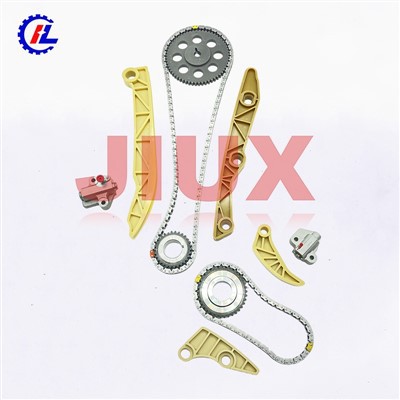
Timing Chain Kit References
- Dodge SRT Demon 170 Official Specifications, Stellantis North America, 2023
- Automotive Navigation System Power Requirements, SAE International, 2022
- RTK GPS Accuracy for Motorsports Applications, International Hot Rod Association (IHRA) Technical Report, 2023
- Dodge CAN Bus Network Compatibility Guidelines, Stellantis Parts Catalog, 2024
Huzhou Hongli Auto Parts Co., Ltd.
With abundant experience, we are one of the most professional fit for dodge manufacturers in China. Please rest assured to buy customized fit for dodge at competitive price from our factory. If you have any enquiry about cooperation, please feel free to email us.
Address: Building 16, No.50 / Building 18, No.58, Dadongwu, Lianshi Town, Nanxun District, Huzhou, Zhejiang, China
E-mail: jiux@timingkit.cn
WebSite: https://www.jiuxkit.com/
